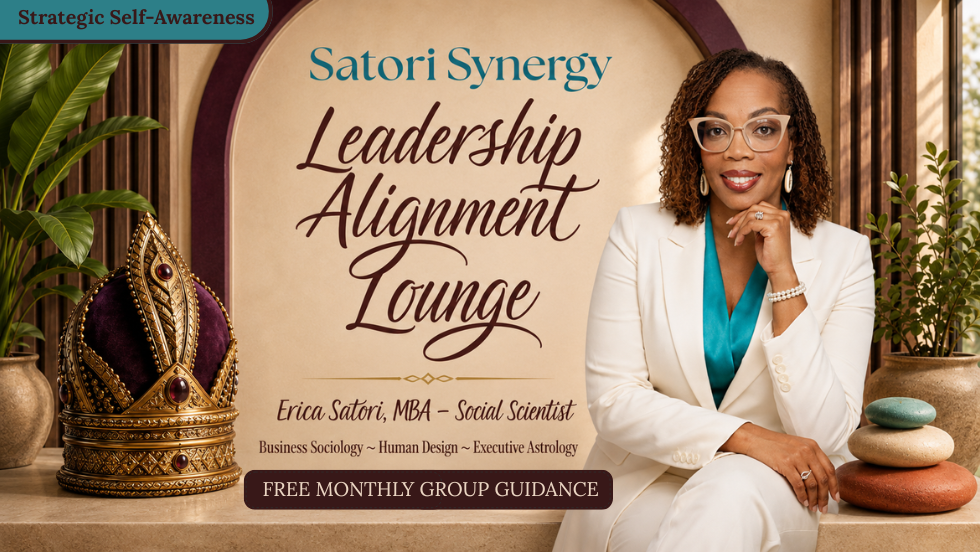
What Is Human Design? A Social Scientist's Perspective on Alignment, Purpose, and Human Potential

Updated: Aug 2

One of the most common questions I receive is, "What is Human Design?" While there are many ways to answer that question, I have found that most people are not actually asking about the system itself. What they are really asking is why life seems to feel effortless for some people and difficult for others. They want to understand their purpose, discover their strengths, and determine whether they are on the right path. In other words, they are searching for alignment.
For decades, mainstream personal and professional development has emphasized effort as the primary driver of success. We are taught that achievement comes from working harder, learning more, pushing through obstacles, and maintaining discipline. While those qualities certainly matter, they do not fully explain why some individuals appear to thrive naturally in certain environments while others struggle despite possessing comparable intelligence, education, or experience. The missing variable is often alignment.
Nature provides a useful lens through which to understand this concept. A fish thrives in water because it is designed to swim. A bird takes flight because it is designed to fly. A seed grows because its potential already exists within its structure. None of these examples require the organism to become something else in order to succeed. Their success is a byproduct of operating according to their design within an environment that supports that design. Human beings are not exempt from this principle, although we often behave as though we are.
The challenge is that people spend years attempting to become versions of themselves that were never authentic to begin with. They choose careers based on prestige rather than fit. They adopt leadership styles that conflict with their natural strengths. They remain in relationships, organizations, and communities that do not support their growth. When these experiences produce frustration or disappointment, many assume the problem lies within them. However, what appears to be a personal deficiency is often a symptom of misalignment.
Purpose Is Not Found. It Is Followed.
Popular culture frequently portrays purpose as a destination waiting to be discovered. The narrative suggests that one day we will uncover a hidden passion, receive a moment of clarity, or stumble upon the perfect career path that suddenly makes everything make sense. While purpose can certainly be accompanied by moments of revelation, my experience working with professionals, leaders, and entrepreneurs suggests that purpose rarely arrives all at once.
Instead, purpose unfolds through a series of aligned decisions over time. When individuals reflect on the most significant moments in their lives, those moments are usually connected to choices. A career transition, a move to a new city, an unexpected opportunity, a relationship, or even a single conversation can alter the trajectory of a person's life. Purpose is less about discovering a predetermined destination and more about recognizing the pattern that emerges from consistently making decisions that align with who you are.
This raises an important question: How do you know which decisions are right for you? This is where Human Design becomes particularly valuable. Rather than focusing solely on what you should do, Human Design helps you understand how you are designed to make decisions, interact with others, and navigate opportunities. In that sense, it serves less as a predictor of purpose and more as a guide toward it.
Human Design as a Framework for Self-Awareness
At its core, Human Design is a self-awareness system that integrates multiple wisdom traditions and observational frameworks into a single model for understanding human behavior and decision-making. The system draws from astrology, the I Ching, the chakra system, Kabbalah, astronomy, genetics, geometry and other disciplines to create what many refer to as an energetic blueprint.
Whether someone views Human Design as symbolic language, archetypal psychology, or a personal development tool is largely a matter of perspective. My interest has never been in debating labels. I am interested in whether a framework helps people understand themselves more clearly and make better decisions. From that standpoint, Human Design and its business application (BG5) offers significant value.
Human Design helps individuals explore questions such as:
How am I naturally designed to make decisions?
What environments support my growth and well-being?
How do I contribute most effectively as a leader, partner, or professional?
Why do certain relationships and opportunities feel energizing while others feel draining?
What type of work allows me to perform at my highest level?
Rather than prescribing who someone should become, Human Design offers insight into who they already are. It provides language for understanding natural strengths, communication styles, decision-making processes, and patterns that may otherwise take decades to recognize through trial and error alone.
Inner Authority and the Science of Alignment
Among all the concepts within Human Design, the one I find most transformative is Inner Authority. In simple terms, Inner Authority represents an individual's unique decision-making process. It describes how a person naturally arrives at clarity and how their body communicates their truth.
Long before people are influenced by societal expectations, cultural norms, professional standards, or family beliefs, they possess an internal navigation system, your own GPS. Human Design proposes that each person has a distinct way of accessing that guidance. The problem is that many individuals spend years overriding their own internal wisdom in favor of external validation.
As a result, they pursue goals that are not truly theirs, adopt definitions of success that do not fit, and find themselves disconnected from their authentic desires. Human Design invites people to reverse that process. It encourages them to trust their own mechanics, honor their own timing, and make decisions in a way that is consistent with their design. Alignment, therefore, is not simply about doing what you are good at. It is about making decisions in the way you are designed to make them.
The Sociology of Misalignment
My background in sociology has shaped how I interpret Human Design. While many people approach the system from a purely analytical or psychological perspective, I am particularly interested in what it reveals about human diversity and social organization.
Most institutions are built around standardization. Educational systems, workplaces, organizations, and even families often operate according to a shared set of expectations regarding behavior, communication, achievement, and success. Individuals are encouraged to follow similar timelines, pursue similar milestones, and adopt similar methods for reaching their goals. While standardization can create order, it can also obscure individuality.
Human beings are not designed to contribute in identical ways. They do not learn, lead, communicate, create, or make decisions in the same manner. Human Design presents a compelling alternative to conventional approaches by suggesting that diversity is not merely demographic.
Human Design encourages us to recognize forms of diversity that are often overlooked:
Differences in how people make decisions
Differences in how people process information
Differences in how people communicate and influence others
Differences in what motivates, energizes, and fulfills them
Differences in how people are naturally designed to contribute
In this sense, Human Design can be understood as a science of differentiation. It provides language for understanding the unique ways people are naturally designed to contribute to the collective. This perspective is particularly important because many highly capable individuals mistakenly conclude that they are failing when they are simply being measured against standards that have little to do with their natural strengths.
What appears to be underperformance is often a mismatch between the individual and the environment in which they are attempting to succeed.

Why Environment Matters as Much as Design
Self-awareness alone is not enough. Understanding who you are is only half of the equation. The environment in which you attempt to express that identity matters just as much.
Consider a sunflower seed. Everything required for that seed to become a sunflower already exists within it. The height, growth pattern, and potential are embedded in its design. However, if that same seed is placed on concrete rather than fertile soil, its potential remains unrealized. The problem is not the seed. The problem is the environment.
The same principle applies to human beings. A peacock does not thrive by trying to become an eagle, nor does a dolphin flourish in the desert. Both are remarkable precisely because they operate according to their nature within environments that support their strengths. Yet many people spend years attempting to force themselves into environments that are fundamentally incompatible with who they are.
When design and environment are misaligned, people often experience:
Burnout despite being highly capable
Frustration despite significant effort
Career stagnation despite strong credentials
Relationship challenges despite good intentions
A persistent feeling that something is "missing"
This is why I often say that the cure for hustle culture is alignment. No amount of effort can compensate for an environment that consistently works against an individual's design. Conversely, when design and environment are aligned, performance often appears effortless. What others perceive as genius is frequently the result of a person operating within conditions that allow their natural gifts to emerge.
Human Design Is Not the Destination
Human Design is not a panacea, nor is it the only framework capable of producing self-awareness. It is simply one of the most comprehensive tools I have encountered for helping people understand themselves and their place within larger systems. Throughout my career as a social scientist, leadership strategist, diversity executive, and advisor, I have worked with individuals across industries, institutions, and life stages. Regardless of the environment, I have consistently observed the same truth: people perform better when they understand themselves.

Most people do not need another productivity hack, personality label, or goal-setting worksheet. What they need is orientation. They need a clearer understanding of how they naturally operate before deciding where they are going next. When individuals gain that level of self-awareness, they make stronger decisions, build healthier relationships, navigate transitions more effectively, and lead with greater confidence.
What makes my approach different is that I focus on the person operating within the system. Most consultants analyze processes. Most coaches focus on goals. Most assessments measure behavior. While each of those approaches has value, I integrate Human Design, sociology, leadership development, behavioral frameworks, astro-psychology, and Ikigai philosophy to help people understand:
Who they are
What they are designed to do
When to engage
Where they create the greatest value
Why they do what they do
How they are designed to contribute
Whether we are discussing your career, leadership, relationships, business, parenting, or purpose, everything changes when those questions become clear. The confusion begins to fade. Decisions become easier. Opportunities become easier to evaluate. Most importantly, you stop trying to become someone else and begin learning how to fully express who you already are.
The Real Question
People often come to Human Design asking, "What is my purpose?" In my experience, that is rarely the most useful question. A more productive question is, "Who am I?" Purpose tends to reveal itself when people stop chasing who they think they are supposed to be and begin understanding who they already are. When design and environment align, success is no longer the goal. It becomes the natural outcome.
If you are feeling stuck, burned out, uncertain about your next move, or simply curious about how you are designed to thrive, Human Design can provide a powerful starting point for clarity. The goal is not to put you in a box. The goal is to give you a map. Self-awareness is valuable, but self-awareness paired with action is transformative.
Ready for Greater Clarity?
If this article resonated with you, your next step is simple: start learning how you're designed to operate. You can begin by running your complimentary Human Design chart and downloading your Career Design Report, which provides an introduction to your unique energetic blueprint. If you're looking for personalized guidance, an SOS Session offers a focused introductory analysis of your design, decision-making process, strengths, opportunities, and areas of alignment.
For professionals, leaders, entrepreneurs, and individuals navigating a transition, my Strategic Alignment School provides a deeper exploration of purpose, contribution, leadership, and life design through the combined lenses of Human Design, sociology, human systems intelligence, and Ikigai philosophy.
You already have the potential.
You already have the blueprint.
The question is whether you're operating in the right environment and working on the right assignment. The genius isn't missing. The genius is already in your genes.
Ready to understand yourself and your assignment in society? Visit SatoriSynergy.com to learn more about me and my work.